 EN
EN
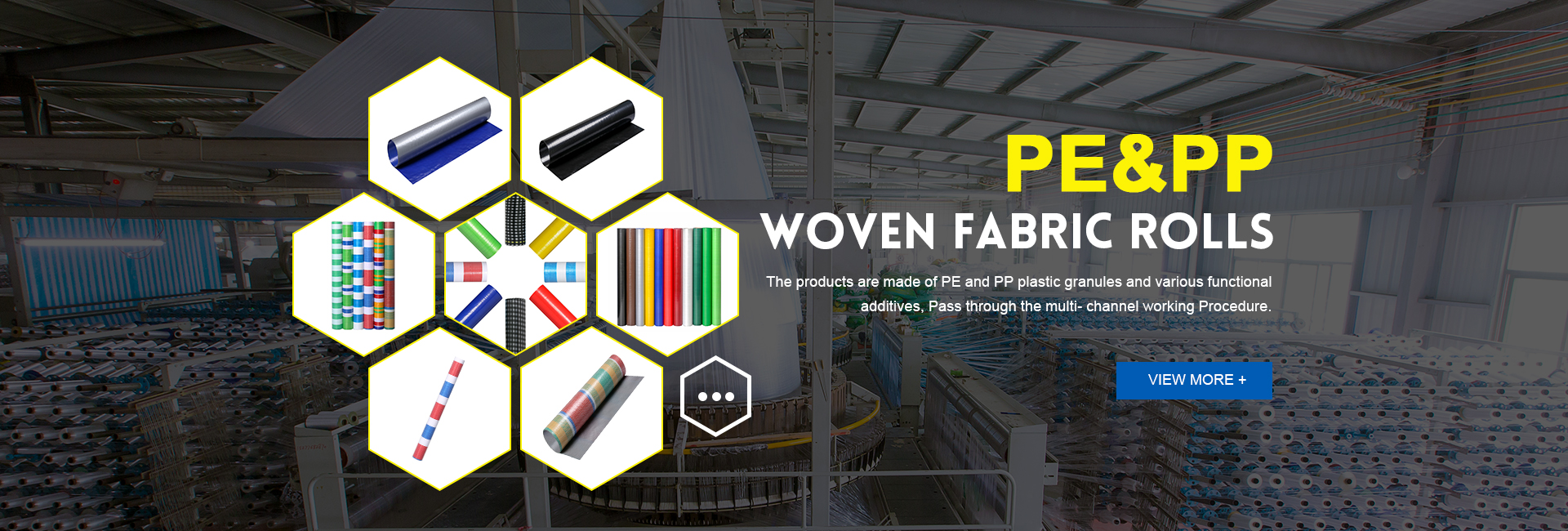
Black Woven Plastic Anti-Seepage Membrane
1. Product Overview
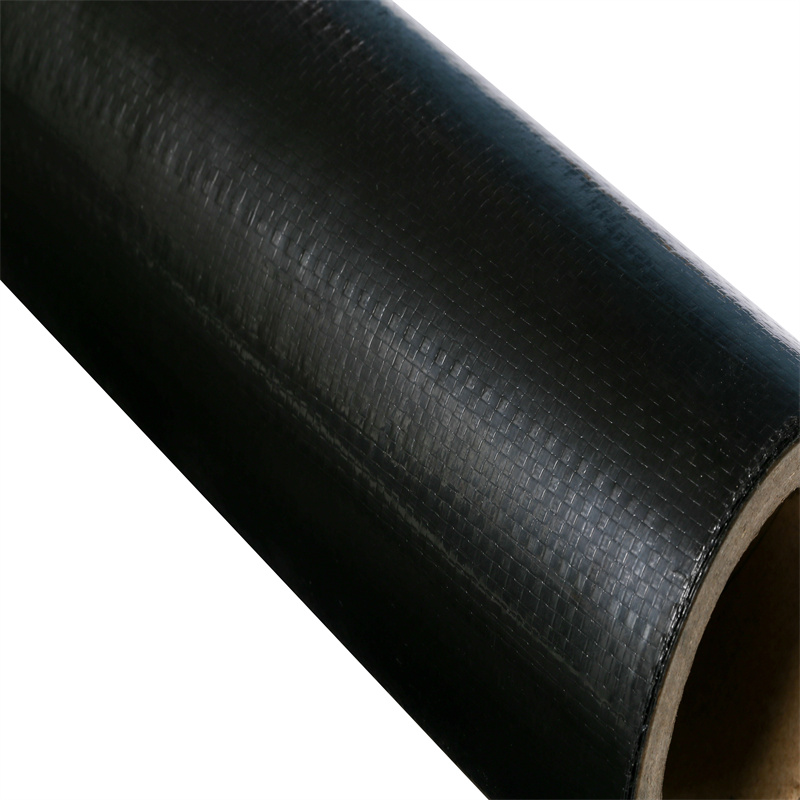
The Black Woven Plastic Anti-Seepage Membrane is an upgraded impermeable material that combines a high-strength woven reinforcement scrim with double-sided PE film lamination — a clear step up from the single-layer HDPE geomembranes currently on the market. It delivers both the high tensile strength, abrasion and tear resistance of woven fabric and the reliable watertight performance of a membrane.
The result: a sturdier structure, better real-world site adaptability, zero special installation requirements, and lower overall cost.
Key positioning: works on unprepared bases, resists sharp gravel, tolerates foot traffic, needs no professional equipment — roughly double the value for money. It fits 90% of civil and light-commercial anti-seepage needs in emerging markets, making it the budget-friendly replacement for traditional HDPE geomembrane. A lightweight composite membrane product.
2. Market Pain Points: Why Traditional HDPE Geomembranes Are Getting Harder to Sell
Conventional HDPE geomembrane may look superior on paper, but it performs poorly in real-world installation. End-user complaints, rework and cost overruns are frequent — and that is the dealer's biggest pain:
Fragile and easily damaged
● — Pure film has no reinforcement. Gravel, stones, roots, or even light foot traffic can puncture it. A geotextile underlay is required before installation, adding labor and material costs.
High installation barrier
● — Professional welders and heat-weld machines are required. Small-area jobs and DIY users have no way to install it, and labor costs easily exceed the material price itself.
Slips on slopes
● — Smooth HDPE film has very low friction. On pond and reservoir slope linings it slides and shifts, leading to high rework rates.
High price point
● — Standard national-spec HDPE geomembrane is expensive. Retail buyers, small projects and short-term project clients find it too costly, making sales conversion difficult.
Poor site adaptability
● — Rural sites and small projects often have uneven, gravel-filled bases. HDPE membrane punctures easily, causing endless after-sales issues.
In short: HDPE geomembrane suits only large, high-spec projects. For retail buyers and small-to-medium civil applications in emerging markets, it is over-engineered and poor value for money.
3. Core Advantages
We address the mainstream needs of the new market with five key advantages: durable, affordable, worry-free, easy to install, zero after-sales hassle.
1. Sturdier structure — abrasion & tear resistant, gravel-proof (key differentiator)
Traditional HDPE film relies on thickness to resist puncture. The woven membrane features an integrated high-strength woven scrim that outperforms HDPE film of the same thickness in tear resistance, crush resistance and puncture resistance. Gravel, hard soil and debris on site need no fine clearing, and no extra geotextile underlay is required — cutting labor costs in half. Foot traffic from people and livestock, even light vehicle pressure, will not easily damage it, dramatically reducing the cost of installation mistakes.
2. Zero-barrier installation — anyone can lay it, no professional equipment (the feature end users appreciate most)
Gone are HDPE's requirements for machine heat-welding and certified installers. The woven membrane is lightweight and flexible, and can be cut and joined directly on site. Seams are sealed with adhesive tape or simple heat sealing. Ordinary workers and farmers can install it themselves — no welding machine, no technical skills, much shorter timelines. Small-area projects can be installed and finished the same day.
3. Non-slip on slopes — far better slope lining stability than ordinary film
The textured woven surface provides high friction. When installed on fish pond, reservoir or river channel slopes, it conforms tightly and will not slide, bulge or shift the way HDPE film does. Slope protection is more stable, with a better finished look and virtually no maintenance or rework later on.
4. Reliable impermeability — covers 90% of civil applications
The double-sided film lamination delivers stable water-barrier performance: watertight, water-retaining and seepage-free. It fully covers fish farming ponds, field water storage, small reservoirs, ornamental ponds, simple slope linings, greenhouse moisture barriers and all other civil and small-to-medium engineering needs — eliminating daily leakage and water loss.
5. Unbeatable value — customers save money, dealers earn more (key market expansion advantage)
At equivalent impermeability performance, the total installed cost of the woven membrane is only one-third to one-half that of HDPE geomembrane — lower material cost, lower installation cost, and near-zero rework cost.
4. Applications
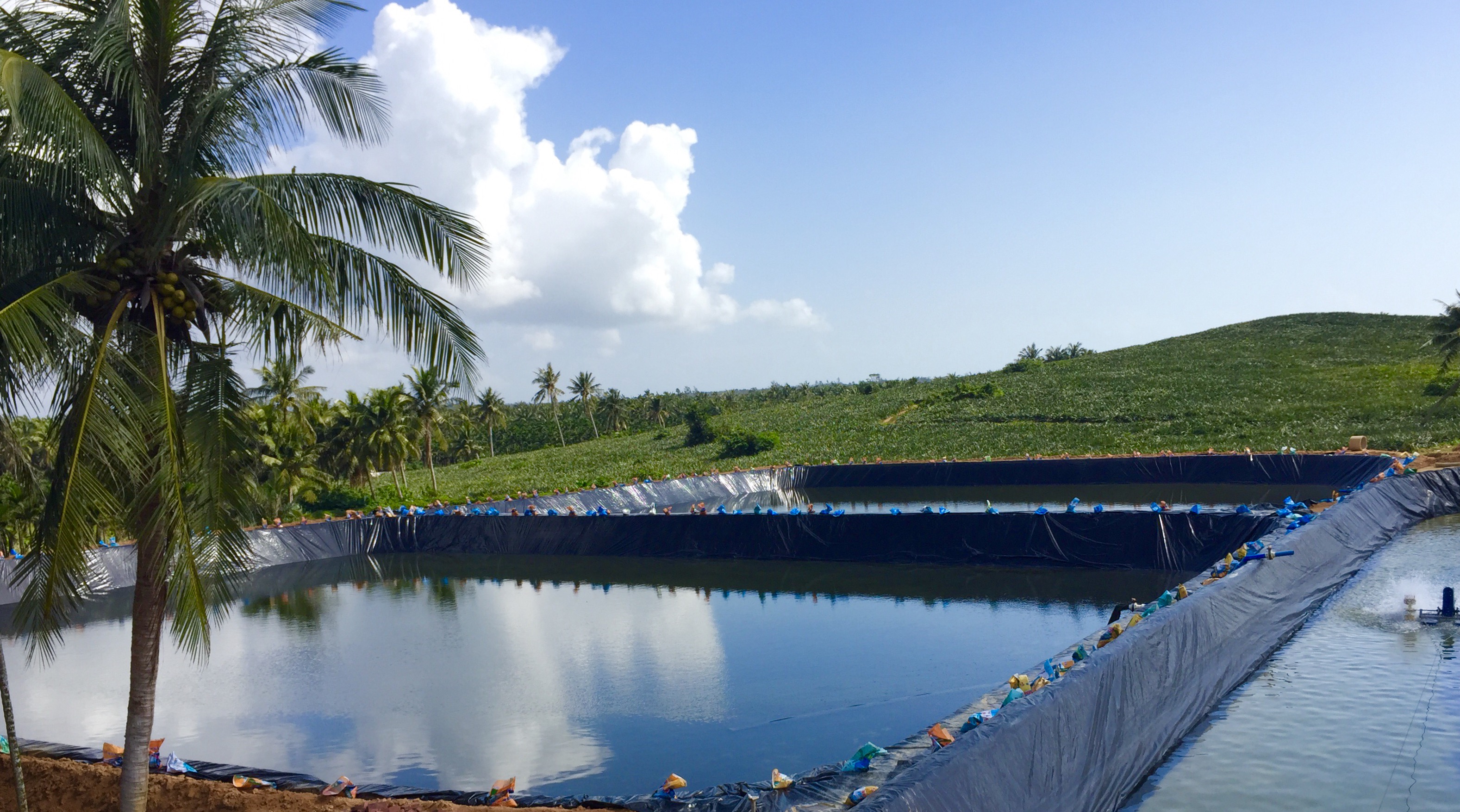
● Small rural fish ponds & aquaculture ponds
● Field water storage basins
● Orchard water storage pits
● Artificial landscape lakes
● Simple slope protection / revetment
● Greenhouse roof moisture barriers
● Temporary water retention projects
● Site moisture protection & anti-seepage lining
5. Specifications
| Item | Details |
| Standard weights | 130 gsm / 160 gsm / 190 gsm / 250 gsm |
| Standard widths | 2 m / 3 m / 4 m / 6 m (custom cutting available) |
| Key advantages | Ample stock ready for shipment ` Custom sizes supported |